🚚 Free Worldwide Shipping on All Orders!Shop Now

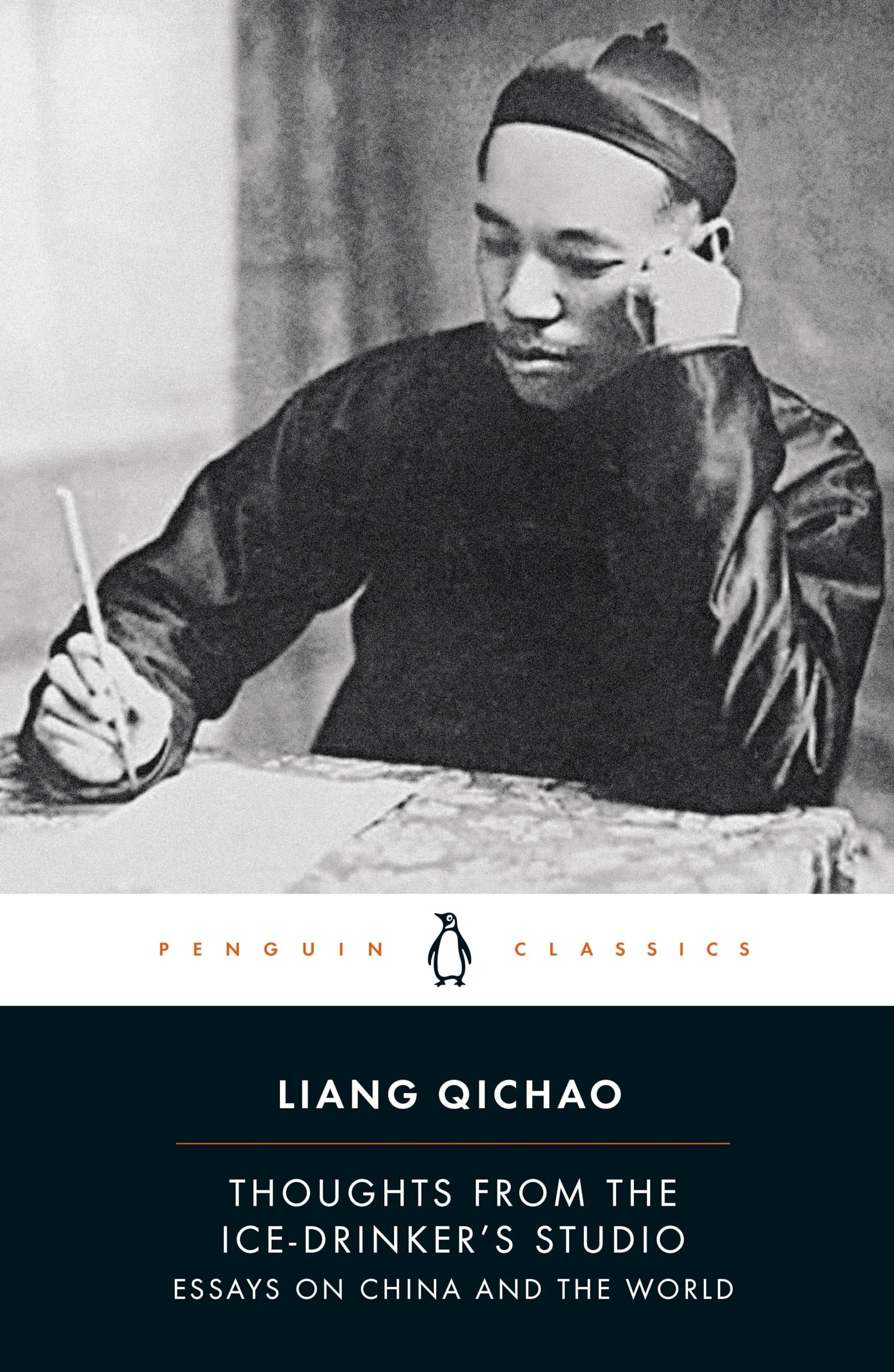
Thoughts from the Ice-Drinker's Studio Essays on China and the World
The essential writings of China’s first iconic modern intellectual, intent on reforming an entire nation, now published for the first time in Penguin Classics
A Penguin Classic
The power, anger, and fluency of Liang Qichao’s writings make him one of the towering figures in modern Chinese literature. He saw his great, almost unmanageable task as an attempt to write China into the new era—to provide an ancient country, devastated by civil war and foreign predators, with the intellectual equipment to renew itself.
Liang said that he wrote from an “ice-drinker’s studio,” implying that underneath his dispassionate, disabused, and rational tone lay an ardor and passion that only ice could cool. China could recover only through a clear-sighted, informed understanding of its enemies—and by engaging in a thoroughgoing self-critique. Liang did not propose aping the West but taking only what China needed to “renew the people” and create “new citizens.” Then China would be able to expel its invaders, reform its society, and become a great power once more.
This selection of pieces shows Liang’s extraordinary range and the burning sense of mission that drove him on, attempting to galvanize and refresh an entire nation. Blending Confucianism, Buddhism, and the Western Enlightenment, Liang’s ideas about nation, democracy, and morality had a profound impact on Chinese visions of the political order, though the China that eventually emerged from the further disasters of the 1930s and 1940s would be a very different one.
A Penguin Classic
The power, anger, and fluency of Liang Qichao’s writings make him one of the towering figures in modern Chinese literature. He saw his great, almost unmanageable task as an attempt to write China into the new era—to provide an ancient country, devastated by civil war and foreign predators, with the intellectual equipment to renew itself.
Liang said that he wrote from an “ice-drinker’s studio,” implying that underneath his dispassionate, disabused, and rational tone lay an ardor and passion that only ice could cool. China could recover only through a clear-sighted, informed understanding of its enemies—and by engaging in a thoroughgoing self-critique. Liang did not propose aping the West but taking only what China needed to “renew the people” and create “new citizens.” Then China would be able to expel its invaders, reform its society, and become a great power once more.
This selection of pieces shows Liang’s extraordinary range and the burning sense of mission that drove him on, attempting to galvanize and refresh an entire nation. Blending Confucianism, Buddhism, and the Western Enlightenment, Liang’s ideas about nation, democracy, and morality had a profound impact on Chinese visions of the political order, though the China that eventually emerged from the further disasters of the 1930s and 1940s would be a very different one.
$8.73
Original: $24.95
-65%Thoughts from the Ice-Drinker's Studio Essays on China and the World—
$24.95
$8.73Product Information
Product Information
Shipping & Returns
Shipping & Returns
Description
The essential writings of China’s first iconic modern intellectual, intent on reforming an entire nation, now published for the first time in Penguin Classics
A Penguin Classic
The power, anger, and fluency of Liang Qichao’s writings make him one of the towering figures in modern Chinese literature. He saw his great, almost unmanageable task as an attempt to write China into the new era—to provide an ancient country, devastated by civil war and foreign predators, with the intellectual equipment to renew itself.
Liang said that he wrote from an “ice-drinker’s studio,” implying that underneath his dispassionate, disabused, and rational tone lay an ardor and passion that only ice could cool. China could recover only through a clear-sighted, informed understanding of its enemies—and by engaging in a thoroughgoing self-critique. Liang did not propose aping the West but taking only what China needed to “renew the people” and create “new citizens.” Then China would be able to expel its invaders, reform its society, and become a great power once more.
This selection of pieces shows Liang’s extraordinary range and the burning sense of mission that drove him on, attempting to galvanize and refresh an entire nation. Blending Confucianism, Buddhism, and the Western Enlightenment, Liang’s ideas about nation, democracy, and morality had a profound impact on Chinese visions of the political order, though the China that eventually emerged from the further disasters of the 1930s and 1940s would be a very different one.
A Penguin Classic
The power, anger, and fluency of Liang Qichao’s writings make him one of the towering figures in modern Chinese literature. He saw his great, almost unmanageable task as an attempt to write China into the new era—to provide an ancient country, devastated by civil war and foreign predators, with the intellectual equipment to renew itself.
Liang said that he wrote from an “ice-drinker’s studio,” implying that underneath his dispassionate, disabused, and rational tone lay an ardor and passion that only ice could cool. China could recover only through a clear-sighted, informed understanding of its enemies—and by engaging in a thoroughgoing self-critique. Liang did not propose aping the West but taking only what China needed to “renew the people” and create “new citizens.” Then China would be able to expel its invaders, reform its society, and become a great power once more.
This selection of pieces shows Liang’s extraordinary range and the burning sense of mission that drove him on, attempting to galvanize and refresh an entire nation. Blending Confucianism, Buddhism, and the Western Enlightenment, Liang’s ideas about nation, democracy, and morality had a profound impact on Chinese visions of the political order, though the China that eventually emerged from the further disasters of the 1930s and 1940s would be a very different one.