🚚 Free Worldwide Shipping on All Orders!Shop Now

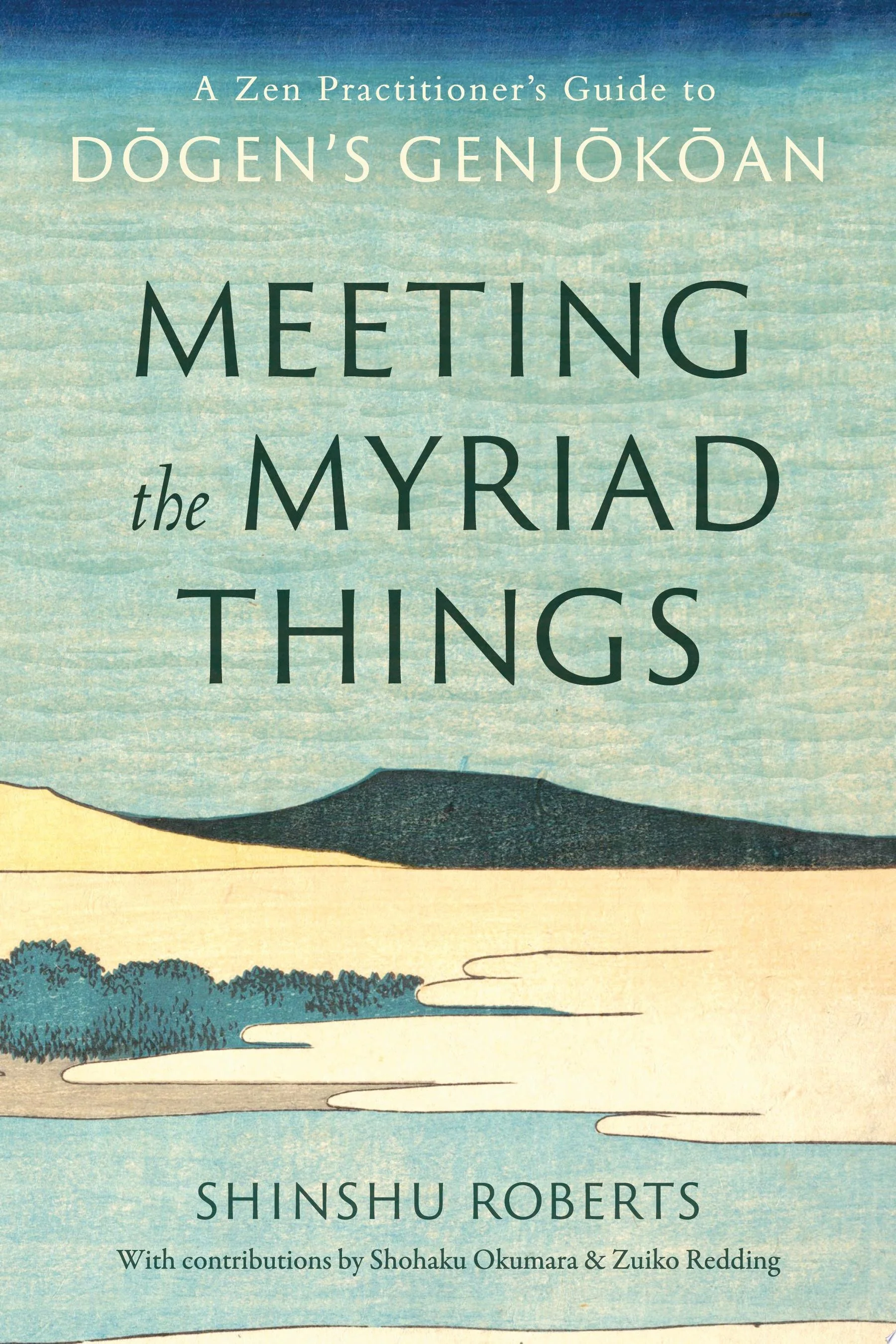
Meeting the Myriad Things A Zen Practitioner's Guide to Dogen's Genjokoan
A guide to awakening buddha mind for the contemporary Zen practitioner.
In the words of Eihei Dōgen, the thirteenth-century Buddhist monk who introduced the Sōtō school of Zen to Japan, “To study the Buddha way is to study the self. To study the self is to forget the self. To forget the self is to be actualized by myriad things.” Centuries later, these enigmatic words from his seminal “Genjōkōan” (Actualizing the Fundamental Point) are still studied in Zen communities the world over.
But what did Dōgen really mean when he encouraged studying the self to forget the self? In this clarifying new commentary, esteemed Zen teacher Shinshu Roberts takes readers on a journey to understand Japan’s great Buddhist philosopher. Roberts applies her deep familiarity with Dōgen’s work to illuminate the text as a unified story in which Dōgen reveals the nondual nature of reality.
In addition to a full translation of Dōgen’s “Genjōkōan,” this book includes the commentary Okikigakishō (“Notes of What Was Heard and Extracted”), written by two of Dōgen’s direct students—the first time an English translation of this highly influential work has appeared in print.
In the words of Eihei Dōgen, the thirteenth-century Buddhist monk who introduced the Sōtō school of Zen to Japan, “To study the Buddha way is to study the self. To study the self is to forget the self. To forget the self is to be actualized by myriad things.” Centuries later, these enigmatic words from his seminal “Genjōkōan” (Actualizing the Fundamental Point) are still studied in Zen communities the world over.
But what did Dōgen really mean when he encouraged studying the self to forget the self? In this clarifying new commentary, esteemed Zen teacher Shinshu Roberts takes readers on a journey to understand Japan’s great Buddhist philosopher. Roberts applies her deep familiarity with Dōgen’s work to illuminate the text as a unified story in which Dōgen reveals the nondual nature of reality.
In addition to a full translation of Dōgen’s “Genjōkōan,” this book includes the commentary Okikigakishō (“Notes of What Was Heard and Extracted”), written by two of Dōgen’s direct students—the first time an English translation of this highly influential work has appeared in print.
$39.95
Meeting the Myriad Things A Zen Practitioner's Guide to Dogen's Genjokoan—
$39.95
Product Information
Product Information
Shipping & Returns
Shipping & Returns
Description
A guide to awakening buddha mind for the contemporary Zen practitioner.
In the words of Eihei Dōgen, the thirteenth-century Buddhist monk who introduced the Sōtō school of Zen to Japan, “To study the Buddha way is to study the self. To study the self is to forget the self. To forget the self is to be actualized by myriad things.” Centuries later, these enigmatic words from his seminal “Genjōkōan” (Actualizing the Fundamental Point) are still studied in Zen communities the world over.
But what did Dōgen really mean when he encouraged studying the self to forget the self? In this clarifying new commentary, esteemed Zen teacher Shinshu Roberts takes readers on a journey to understand Japan’s great Buddhist philosopher. Roberts applies her deep familiarity with Dōgen’s work to illuminate the text as a unified story in which Dōgen reveals the nondual nature of reality.
In addition to a full translation of Dōgen’s “Genjōkōan,” this book includes the commentary Okikigakishō (“Notes of What Was Heard and Extracted”), written by two of Dōgen’s direct students—the first time an English translation of this highly influential work has appeared in print.
In the words of Eihei Dōgen, the thirteenth-century Buddhist monk who introduced the Sōtō school of Zen to Japan, “To study the Buddha way is to study the self. To study the self is to forget the self. To forget the self is to be actualized by myriad things.” Centuries later, these enigmatic words from his seminal “Genjōkōan” (Actualizing the Fundamental Point) are still studied in Zen communities the world over.
But what did Dōgen really mean when he encouraged studying the self to forget the self? In this clarifying new commentary, esteemed Zen teacher Shinshu Roberts takes readers on a journey to understand Japan’s great Buddhist philosopher. Roberts applies her deep familiarity with Dōgen’s work to illuminate the text as a unified story in which Dōgen reveals the nondual nature of reality.
In addition to a full translation of Dōgen’s “Genjōkōan,” this book includes the commentary Okikigakishō (“Notes of What Was Heard and Extracted”), written by two of Dōgen’s direct students—the first time an English translation of this highly influential work has appeared in print.