🚚 Free Worldwide Shipping on All Orders!Shop Now

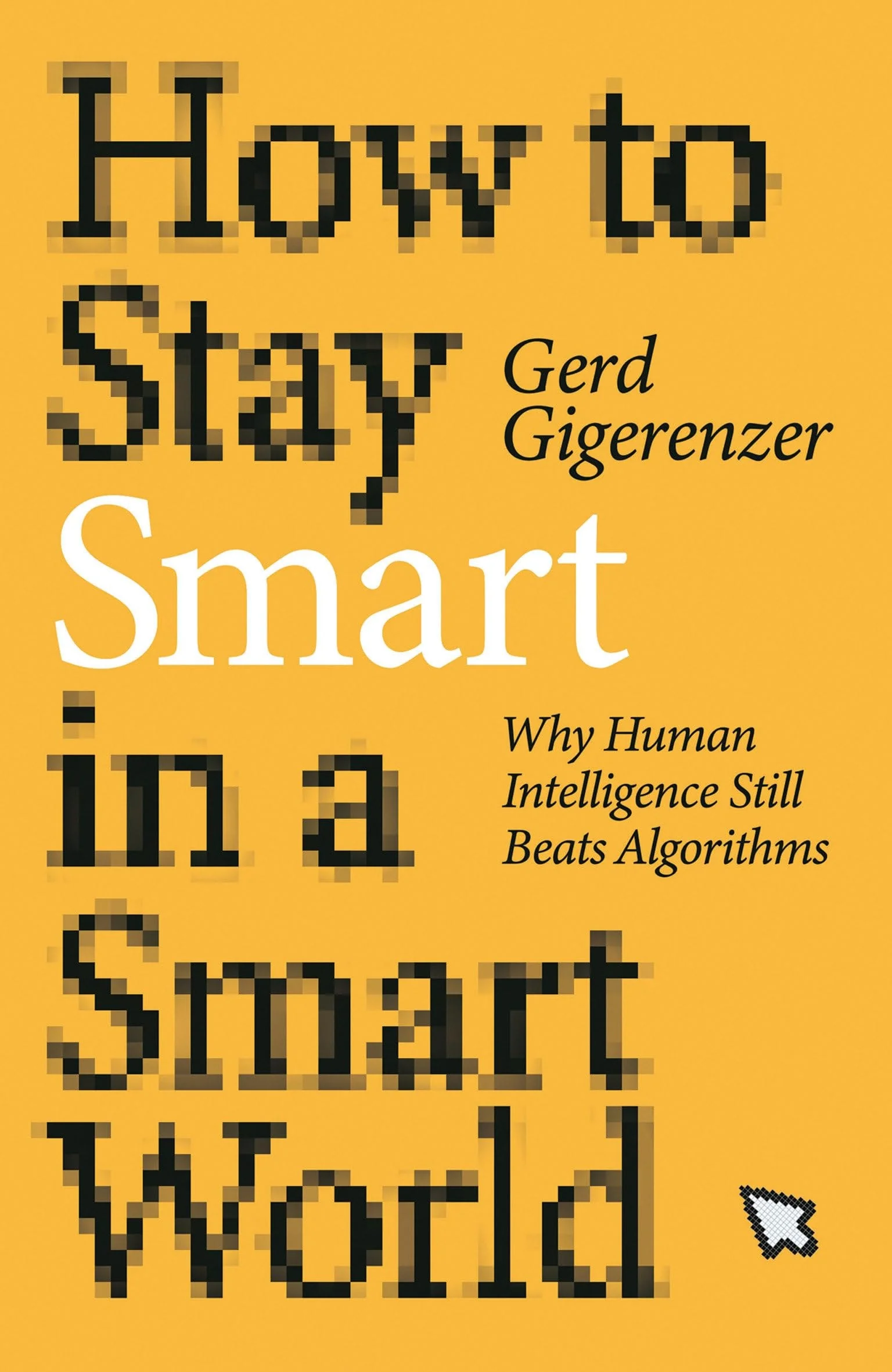
How to Stay Smart in a Smart World Why Human Intelligence Still Beats Algorithms
How to stay in charge in a world populated by algorithms that beat us in chess, find us romantic partners, and tell us to “turn right in 500 yards.”
Doomsday prophets of technology predict that robots will take over the world, leaving humans behind in the dust. Tech industry boosters think replacing people with software might make the world a better place—while tech industry critics warn darkly about surveillance capitalism. Despite their differing views of the future, they all seem to agree: machines will soon do everything better than humans. In How to Stay Smart in a Smart World, Gerd Gigerenzer shows why that’s not true, and tells us how we can stay in charge in a world populated by algorithms.
Machines powered by artificial intelligence are good at some things (playing chess), but not others (life-and-death decisions, or anything involving uncertainty). Gigerenzer explains why algorithms often fail at finding us romantic partners (love is not chess), why self-driving cars fall prey to the Russian Tank Fallacy, and how judges and police rely increasingly on nontransparent “black box” algorithms to predict whether a criminal defendant will reoffend or show up in court. He invokes Black Mirror, considers the privacy paradox (people want privacy but give their data away), and explains that social media get us hooked by programming intermittent reinforcement in the form of the “like” button. We shouldn’t trust smart technology unconditionally, Gigerenzer tells us, but we shouldn’t fear it unthinkingly, either.
Doomsday prophets of technology predict that robots will take over the world, leaving humans behind in the dust. Tech industry boosters think replacing people with software might make the world a better place—while tech industry critics warn darkly about surveillance capitalism. Despite their differing views of the future, they all seem to agree: machines will soon do everything better than humans. In How to Stay Smart in a Smart World, Gerd Gigerenzer shows why that’s not true, and tells us how we can stay in charge in a world populated by algorithms.
Machines powered by artificial intelligence are good at some things (playing chess), but not others (life-and-death decisions, or anything involving uncertainty). Gigerenzer explains why algorithms often fail at finding us romantic partners (love is not chess), why self-driving cars fall prey to the Russian Tank Fallacy, and how judges and police rely increasingly on nontransparent “black box” algorithms to predict whether a criminal defendant will reoffend or show up in court. He invokes Black Mirror, considers the privacy paradox (people want privacy but give their data away), and explains that social media get us hooked by programming intermittent reinforcement in the form of the “like” button. We shouldn’t trust smart technology unconditionally, Gigerenzer tells us, but we shouldn’t fear it unthinkingly, either.
$35.95
How to Stay Smart in a Smart World Why Human Intelligence Still Beats Algorithms—
$35.95
Product Information
Product Information
Shipping & Returns
Shipping & Returns
Description
How to stay in charge in a world populated by algorithms that beat us in chess, find us romantic partners, and tell us to “turn right in 500 yards.”
Doomsday prophets of technology predict that robots will take over the world, leaving humans behind in the dust. Tech industry boosters think replacing people with software might make the world a better place—while tech industry critics warn darkly about surveillance capitalism. Despite their differing views of the future, they all seem to agree: machines will soon do everything better than humans. In How to Stay Smart in a Smart World, Gerd Gigerenzer shows why that’s not true, and tells us how we can stay in charge in a world populated by algorithms.
Machines powered by artificial intelligence are good at some things (playing chess), but not others (life-and-death decisions, or anything involving uncertainty). Gigerenzer explains why algorithms often fail at finding us romantic partners (love is not chess), why self-driving cars fall prey to the Russian Tank Fallacy, and how judges and police rely increasingly on nontransparent “black box” algorithms to predict whether a criminal defendant will reoffend or show up in court. He invokes Black Mirror, considers the privacy paradox (people want privacy but give their data away), and explains that social media get us hooked by programming intermittent reinforcement in the form of the “like” button. We shouldn’t trust smart technology unconditionally, Gigerenzer tells us, but we shouldn’t fear it unthinkingly, either.
Doomsday prophets of technology predict that robots will take over the world, leaving humans behind in the dust. Tech industry boosters think replacing people with software might make the world a better place—while tech industry critics warn darkly about surveillance capitalism. Despite their differing views of the future, they all seem to agree: machines will soon do everything better than humans. In How to Stay Smart in a Smart World, Gerd Gigerenzer shows why that’s not true, and tells us how we can stay in charge in a world populated by algorithms.
Machines powered by artificial intelligence are good at some things (playing chess), but not others (life-and-death decisions, or anything involving uncertainty). Gigerenzer explains why algorithms often fail at finding us romantic partners (love is not chess), why self-driving cars fall prey to the Russian Tank Fallacy, and how judges and police rely increasingly on nontransparent “black box” algorithms to predict whether a criminal defendant will reoffend or show up in court. He invokes Black Mirror, considers the privacy paradox (people want privacy but give their data away), and explains that social media get us hooked by programming intermittent reinforcement in the form of the “like” button. We shouldn’t trust smart technology unconditionally, Gigerenzer tells us, but we shouldn’t fear it unthinkingly, either.