🚚 Free Worldwide Shipping on All Orders!Shop Now

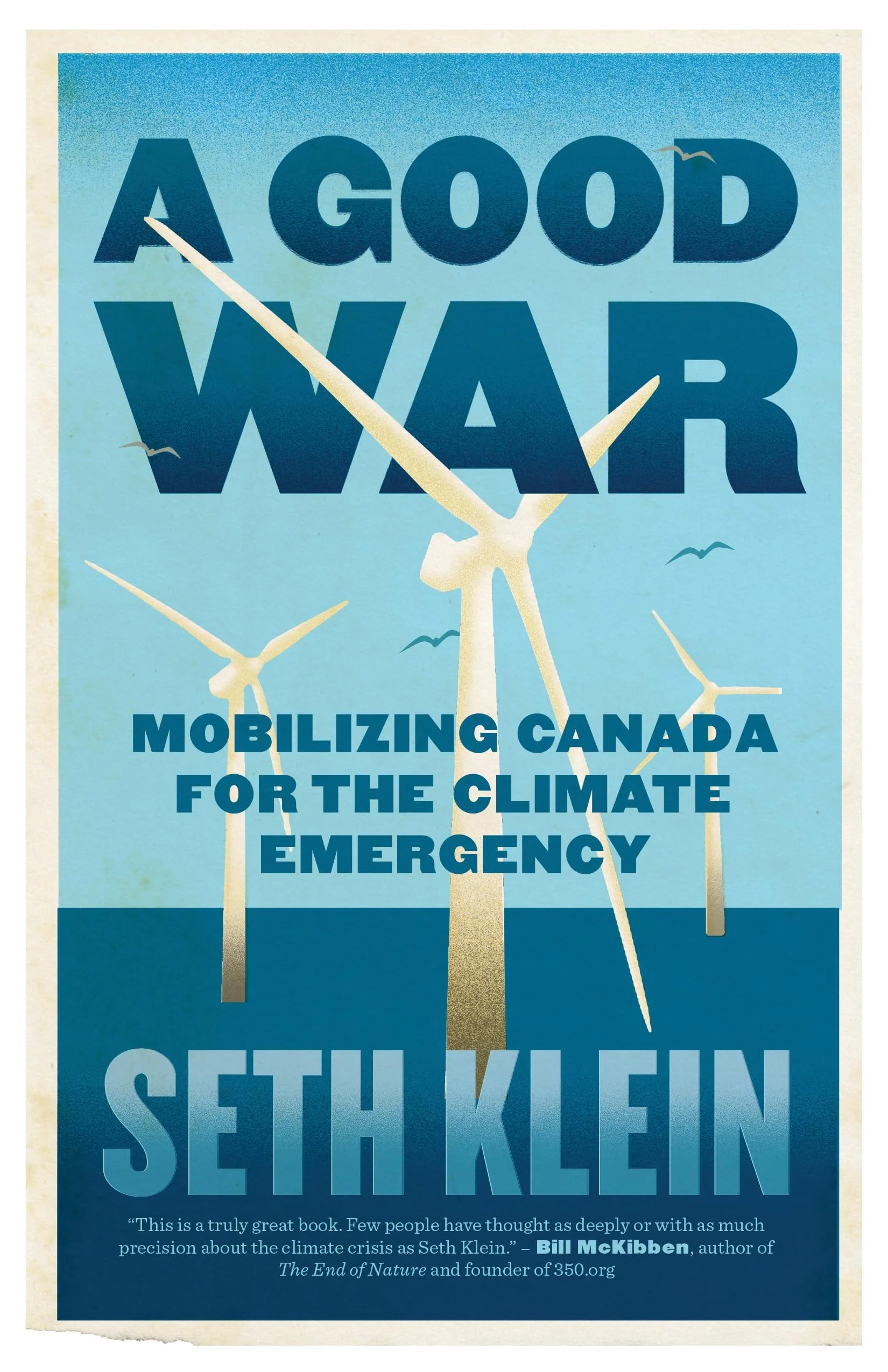
A Good War Mobilizing Canada for the Climate Emergency
“This is the roadmap out of climate crisis that Canadians have been waiting for.” — Naomi Klein, activist and New York Times bestselling author of This Changes Everything and The Shock Doctrine
Canada needs to reduce its greenhouse gas emissions by 50% to prevent a catastrophic 1.5 degree increase in the earth’s average temperature — assumed by many scientists to be a critical “danger line” for the planet and human life as we know it.
It’s 2020, and Canada is not on track to meet our targets. To do so, we’ll need radical systemic change to how we live and work—and fast. How can we ever achieve this?
Top policy analyst and author Seth Klein reveals we can do it now because we’ve done it before. During the Second World War, Canadian citizens and government remade the economy by retooling factories, transforming their workforce, and making the war effort a common cause for all Canadians to contribute to.
Klein demonstrates how wartime thinking and community efforts can be repurposed today for Canada’s own Green New Deal. He shares how we can create jobs and reduce inequality while tackling our climate obligations for a climate neutral—or even climate zero—future. From enlisting broad public support for new economic models, to job creation through investment in green infrastructure, Klein shows us a bold, practical policy plan for Canada’s sustainable future. More than this: A Good War offers a remarkably hopeful message for how we can meet the defining challenge of our lives.
COVID-19 has brought a previously unthinkable pace of change to the world—one which demonstrates our ability to adapt rapidly when we’re at risk. Many recent changes are what Klein proposes in these very pages. The world can, actually, turn on a dime if necessary. This is the blueprint for how to do it.
- One of Canada’s top policy analysts provides the first full-scale blueprint for meeting our climate change commitments
- Contains the results of a national poll on Canadians’ attitudes to the climate crisis
- Shows that radical transformative climate action can be done, while producing jobs and reducing inequality as we retool how we live and work.
- Deeply researched and targeted specifically to Canada and Canadians while providing a model that other countries could follow
Canada needs to reduce its greenhouse gas emissions by 50% to prevent a catastrophic 1.5 degree increase in the earth’s average temperature — assumed by many scientists to be a critical “danger line” for the planet and human life as we know it.
It’s 2020, and Canada is not on track to meet our targets. To do so, we’ll need radical systemic change to how we live and work—and fast. How can we ever achieve this?
Top policy analyst and author Seth Klein reveals we can do it now because we’ve done it before. During the Second World War, Canadian citizens and government remade the economy by retooling factories, transforming their workforce, and making the war effort a common cause for all Canadians to contribute to.
Klein demonstrates how wartime thinking and community efforts can be repurposed today for Canada’s own Green New Deal. He shares how we can create jobs and reduce inequality while tackling our climate obligations for a climate neutral—or even climate zero—future. From enlisting broad public support for new economic models, to job creation through investment in green infrastructure, Klein shows us a bold, practical policy plan for Canada’s sustainable future. More than this: A Good War offers a remarkably hopeful message for how we can meet the defining challenge of our lives.
COVID-19 has brought a previously unthinkable pace of change to the world—one which demonstrates our ability to adapt rapidly when we’re at risk. Many recent changes are what Klein proposes in these very pages. The world can, actually, turn on a dime if necessary. This is the blueprint for how to do it.
$24.95
A Good War Mobilizing Canada for the Climate Emergency—
$24.95
Product Information
Product Information
Shipping & Returns
Shipping & Returns
Description
“This is the roadmap out of climate crisis that Canadians have been waiting for.” — Naomi Klein, activist and New York Times bestselling author of This Changes Everything and The Shock Doctrine
Canada needs to reduce its greenhouse gas emissions by 50% to prevent a catastrophic 1.5 degree increase in the earth’s average temperature — assumed by many scientists to be a critical “danger line” for the planet and human life as we know it.
It’s 2020, and Canada is not on track to meet our targets. To do so, we’ll need radical systemic change to how we live and work—and fast. How can we ever achieve this?
Top policy analyst and author Seth Klein reveals we can do it now because we’ve done it before. During the Second World War, Canadian citizens and government remade the economy by retooling factories, transforming their workforce, and making the war effort a common cause for all Canadians to contribute to.
Klein demonstrates how wartime thinking and community efforts can be repurposed today for Canada’s own Green New Deal. He shares how we can create jobs and reduce inequality while tackling our climate obligations for a climate neutral—or even climate zero—future. From enlisting broad public support for new economic models, to job creation through investment in green infrastructure, Klein shows us a bold, practical policy plan for Canada’s sustainable future. More than this: A Good War offers a remarkably hopeful message for how we can meet the defining challenge of our lives.
COVID-19 has brought a previously unthinkable pace of change to the world—one which demonstrates our ability to adapt rapidly when we’re at risk. Many recent changes are what Klein proposes in these very pages. The world can, actually, turn on a dime if necessary. This is the blueprint for how to do it.
- One of Canada’s top policy analysts provides the first full-scale blueprint for meeting our climate change commitments
- Contains the results of a national poll on Canadians’ attitudes to the climate crisis
- Shows that radical transformative climate action can be done, while producing jobs and reducing inequality as we retool how we live and work.
- Deeply researched and targeted specifically to Canada and Canadians while providing a model that other countries could follow
Canada needs to reduce its greenhouse gas emissions by 50% to prevent a catastrophic 1.5 degree increase in the earth’s average temperature — assumed by many scientists to be a critical “danger line” for the planet and human life as we know it.
It’s 2020, and Canada is not on track to meet our targets. To do so, we’ll need radical systemic change to how we live and work—and fast. How can we ever achieve this?
Top policy analyst and author Seth Klein reveals we can do it now because we’ve done it before. During the Second World War, Canadian citizens and government remade the economy by retooling factories, transforming their workforce, and making the war effort a common cause for all Canadians to contribute to.
Klein demonstrates how wartime thinking and community efforts can be repurposed today for Canada’s own Green New Deal. He shares how we can create jobs and reduce inequality while tackling our climate obligations for a climate neutral—or even climate zero—future. From enlisting broad public support for new economic models, to job creation through investment in green infrastructure, Klein shows us a bold, practical policy plan for Canada’s sustainable future. More than this: A Good War offers a remarkably hopeful message for how we can meet the defining challenge of our lives.
COVID-19 has brought a previously unthinkable pace of change to the world—one which demonstrates our ability to adapt rapidly when we’re at risk. Many recent changes are what Klein proposes in these very pages. The world can, actually, turn on a dime if necessary. This is the blueprint for how to do it.