🚚 Free Worldwide Shipping on All Orders!Shop Now

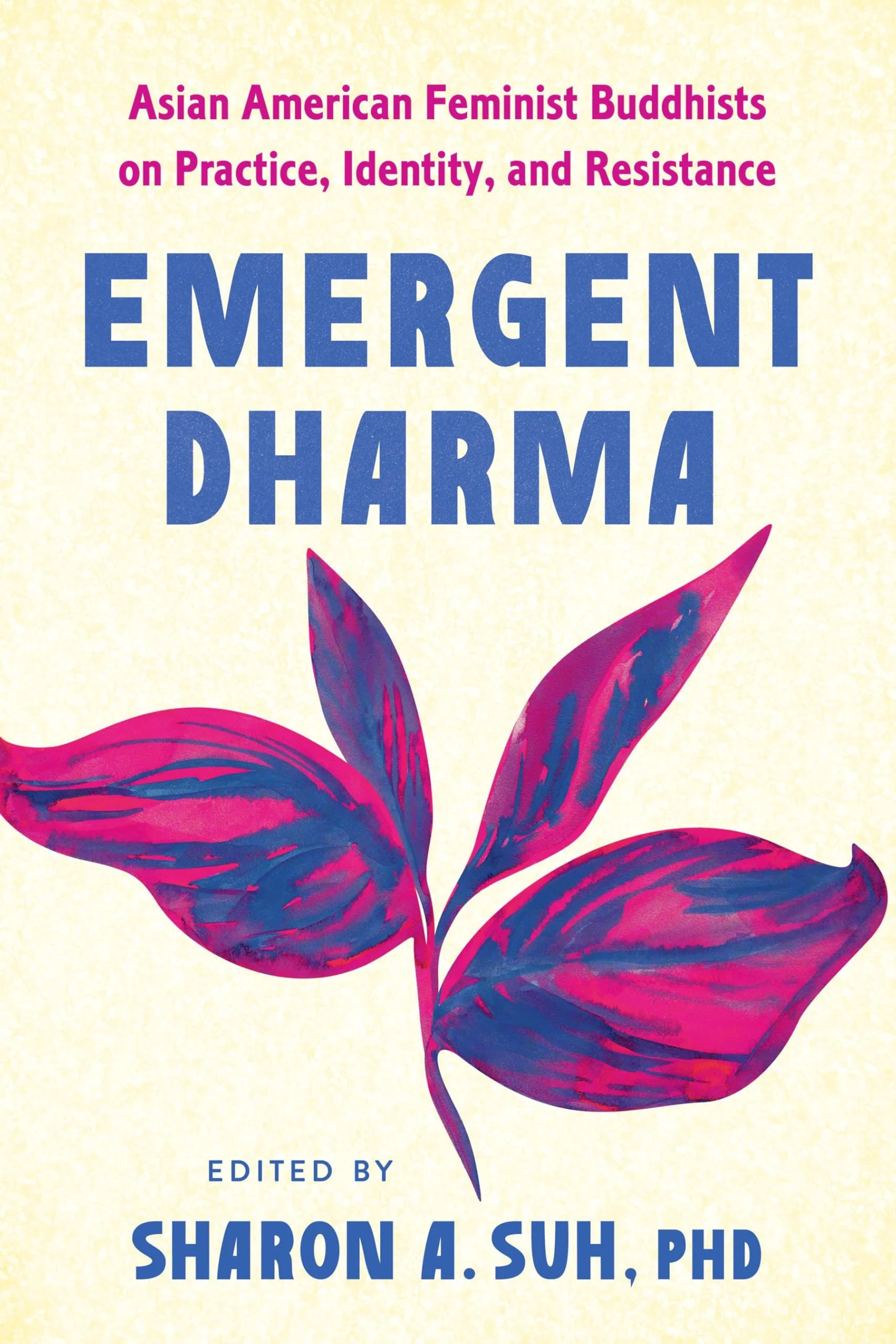
Emergent Dharma Asian American Feminist Buddhists on Practice, Identity, and Resistance
An essential critique of American Buddhism—11 Asian American women reclaim a vibrant feminist Dharma against whitewashing, patriarchy, and model-minority stereotypes
Mainstream American Buddhism is often portrayed through a narrow, problematic lens: a group of mostly white converts sits on cushions. Eyes closed, blissed out, serenely meditating—this is Buddhism made passive and patriarchal, scrubbed of the rich complexities, myriad expressions, historical nuances, and creative ways of being that animate the living, beating heart of feminist Asian American Buddhism.
This book is an overdue correction to whitewashed American ideas of the dharma. Editor Sharon Suh, PhD, offers a first-of-its-kind anthology that pushes back against patriarchal appropriation, orientalized stereotypes, and the idea that Buddhism means meditation…and meditation only. The book’s 11 essays offer a richer, more dynamic vision of Buddhist spirituality. Each asks into vital questions like:
Each essay helps the reader question dominant narratives, wrestle with ambivalence and authenticity, or explore creative expressions of Buddhist spirituality. Together, the 11 writers offer an invitation into the anxieties, joys, struggles, disavowals, and desires that shape their relationship to the dharma—and they expand the category of Buddhist life and practice in a timely, necessary reclamation.
Mainstream American Buddhism is often portrayed through a narrow, problematic lens: a group of mostly white converts sits on cushions. Eyes closed, blissed out, serenely meditating—this is Buddhism made passive and patriarchal, scrubbed of the rich complexities, myriad expressions, historical nuances, and creative ways of being that animate the living, beating heart of feminist Asian American Buddhism.
This book is an overdue correction to whitewashed American ideas of the dharma. Editor Sharon Suh, PhD, offers a first-of-its-kind anthology that pushes back against patriarchal appropriation, orientalized stereotypes, and the idea that Buddhism means meditation…and meditation only. The book’s 11 essays offer a richer, more dynamic vision of Buddhist spirituality. Each asks into vital questions like:
- Must we meditate? Can other acts—practicing martial arts, performing Japanese tea ceremonies, attuning to the spirit world, visiting cemeteries, hand-making objects—offer new relationships to the dharma?
- What does it mean to be a “Bad Buddhist Auntie” who teaches new generations as an imperfect ancestor? Or to be a feminist killjoy who sees Buddhism as a means of healing the wounds of marginalization?
- How can we live with—not in ignorance of—Buddhism’s own history of driving state violence?
- What do we owe our parents—especially our mothers, to whom we are karmically bound?
- And how can Buddhism teach us not only about obedience, but about self-love?
Each essay helps the reader question dominant narratives, wrestle with ambivalence and authenticity, or explore creative expressions of Buddhist spirituality. Together, the 11 writers offer an invitation into the anxieties, joys, struggles, disavowals, and desires that shape their relationship to the dharma—and they expand the category of Buddhist life and practice in a timely, necessary reclamation.
$27.95
Emergent Dharma Asian American Feminist Buddhists on Practice, Identity, and Resistance—
$27.95
Product Information
Product Information
Shipping & Returns
Shipping & Returns
Description
An essential critique of American Buddhism—11 Asian American women reclaim a vibrant feminist Dharma against whitewashing, patriarchy, and model-minority stereotypes
Mainstream American Buddhism is often portrayed through a narrow, problematic lens: a group of mostly white converts sits on cushions. Eyes closed, blissed out, serenely meditating—this is Buddhism made passive and patriarchal, scrubbed of the rich complexities, myriad expressions, historical nuances, and creative ways of being that animate the living, beating heart of feminist Asian American Buddhism.
This book is an overdue correction to whitewashed American ideas of the dharma. Editor Sharon Suh, PhD, offers a first-of-its-kind anthology that pushes back against patriarchal appropriation, orientalized stereotypes, and the idea that Buddhism means meditation…and meditation only. The book’s 11 essays offer a richer, more dynamic vision of Buddhist spirituality. Each asks into vital questions like:
Each essay helps the reader question dominant narratives, wrestle with ambivalence and authenticity, or explore creative expressions of Buddhist spirituality. Together, the 11 writers offer an invitation into the anxieties, joys, struggles, disavowals, and desires that shape their relationship to the dharma—and they expand the category of Buddhist life and practice in a timely, necessary reclamation.
Mainstream American Buddhism is often portrayed through a narrow, problematic lens: a group of mostly white converts sits on cushions. Eyes closed, blissed out, serenely meditating—this is Buddhism made passive and patriarchal, scrubbed of the rich complexities, myriad expressions, historical nuances, and creative ways of being that animate the living, beating heart of feminist Asian American Buddhism.
This book is an overdue correction to whitewashed American ideas of the dharma. Editor Sharon Suh, PhD, offers a first-of-its-kind anthology that pushes back against patriarchal appropriation, orientalized stereotypes, and the idea that Buddhism means meditation…and meditation only. The book’s 11 essays offer a richer, more dynamic vision of Buddhist spirituality. Each asks into vital questions like:
- Must we meditate? Can other acts—practicing martial arts, performing Japanese tea ceremonies, attuning to the spirit world, visiting cemeteries, hand-making objects—offer new relationships to the dharma?
- What does it mean to be a “Bad Buddhist Auntie” who teaches new generations as an imperfect ancestor? Or to be a feminist killjoy who sees Buddhism as a means of healing the wounds of marginalization?
- How can we live with—not in ignorance of—Buddhism’s own history of driving state violence?
- What do we owe our parents—especially our mothers, to whom we are karmically bound?
- And how can Buddhism teach us not only about obedience, but about self-love?
Each essay helps the reader question dominant narratives, wrestle with ambivalence and authenticity, or explore creative expressions of Buddhist spirituality. Together, the 11 writers offer an invitation into the anxieties, joys, struggles, disavowals, and desires that shape their relationship to the dharma—and they expand the category of Buddhist life and practice in a timely, necessary reclamation.