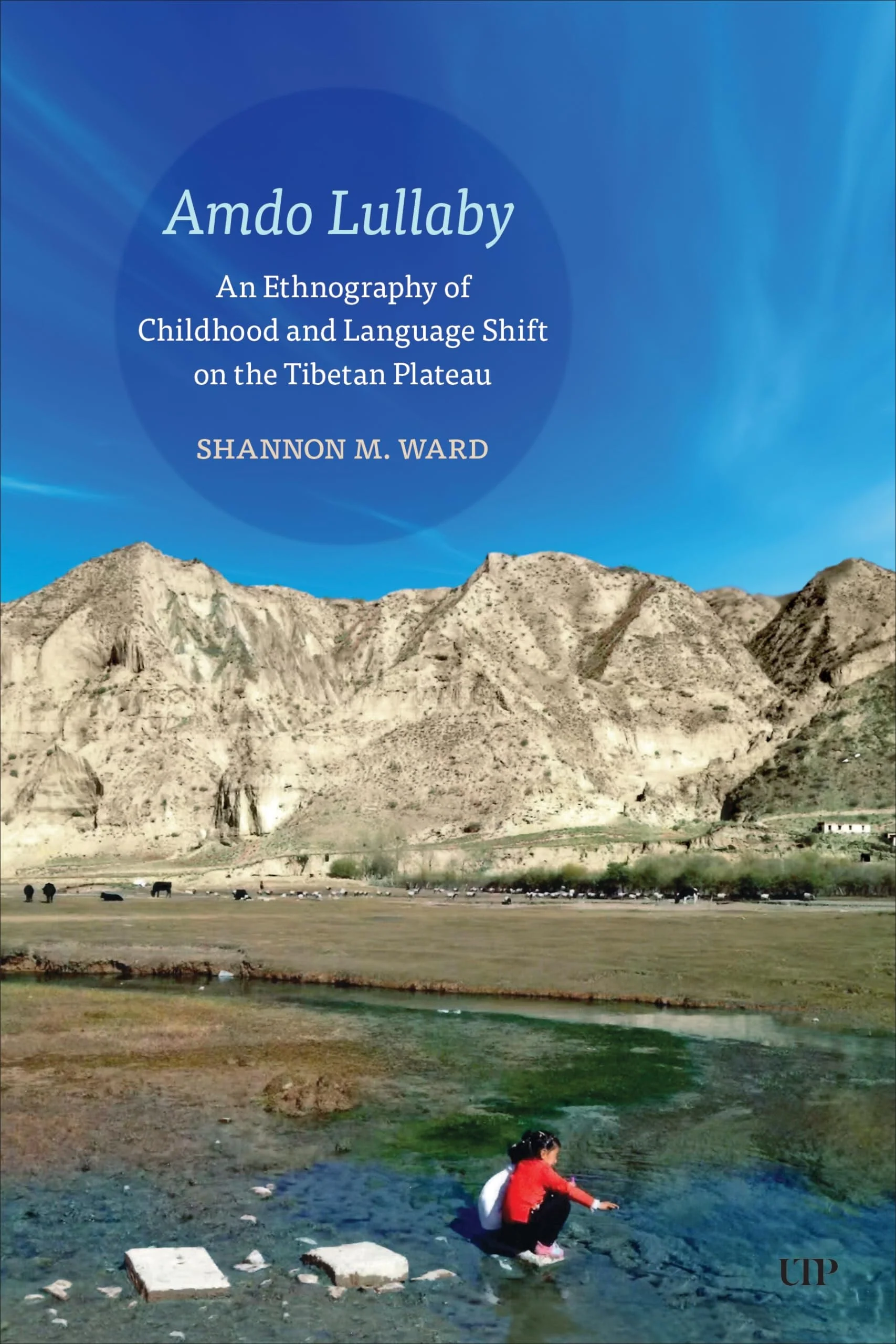
Amdo Lullaby An Ethnography of Childhood and Language Shift on the Tibetan Plateau
In Amdo, a region of eastern Tibet incorporated into mainland China, young children are being raised in a time of social change. In the first decades of the twenty-first century, Chinese state development policies are catalysing rural to urban migration, consolidating schooling in urban centres, and leading Tibetan farmers and nomads to give up their traditional livelihoods. As a result, children face increasing pressure to adopt the state’s official language of Mandarin.
Amdo Lullaby charts the contrasting language socialization trajectories of rural and urban children from one extended family, who are native speakers of a Tibetan language known locally as “Farmer Talk.” By integrating a fine-grained analysis of everyday conversations and oral history interviews, linguistic anthropologist Shannon M. Ward examines the forms of migration and resulting language contact that contribute to Farmer Talk’s unique grammatical structures, and that shape Amdo Tibetan children’s language choices. This analysis reveals that young children are not passively abandoning their mother tongue for standard Mandarin, but instead are reformatting traditional Amdo Tibetan cultural associations among language, place, and kinship as they build their peer relationships in everyday play.
Product Information
Product Information
Shipping & Returns
Shipping & Returns
Description
In Amdo, a region of eastern Tibet incorporated into mainland China, young children are being raised in a time of social change. In the first decades of the twenty-first century, Chinese state development policies are catalysing rural to urban migration, consolidating schooling in urban centres, and leading Tibetan farmers and nomads to give up their traditional livelihoods. As a result, children face increasing pressure to adopt the state’s official language of Mandarin.
Amdo Lullaby charts the contrasting language socialization trajectories of rural and urban children from one extended family, who are native speakers of a Tibetan language known locally as “Farmer Talk.” By integrating a fine-grained analysis of everyday conversations and oral history interviews, linguistic anthropologist Shannon M. Ward examines the forms of migration and resulting language contact that contribute to Farmer Talk’s unique grammatical structures, and that shape Amdo Tibetan children’s language choices. This analysis reveals that young children are not passively abandoning their mother tongue for standard Mandarin, but instead are reformatting traditional Amdo Tibetan cultural associations among language, place, and kinship as they build their peer relationships in everyday play.