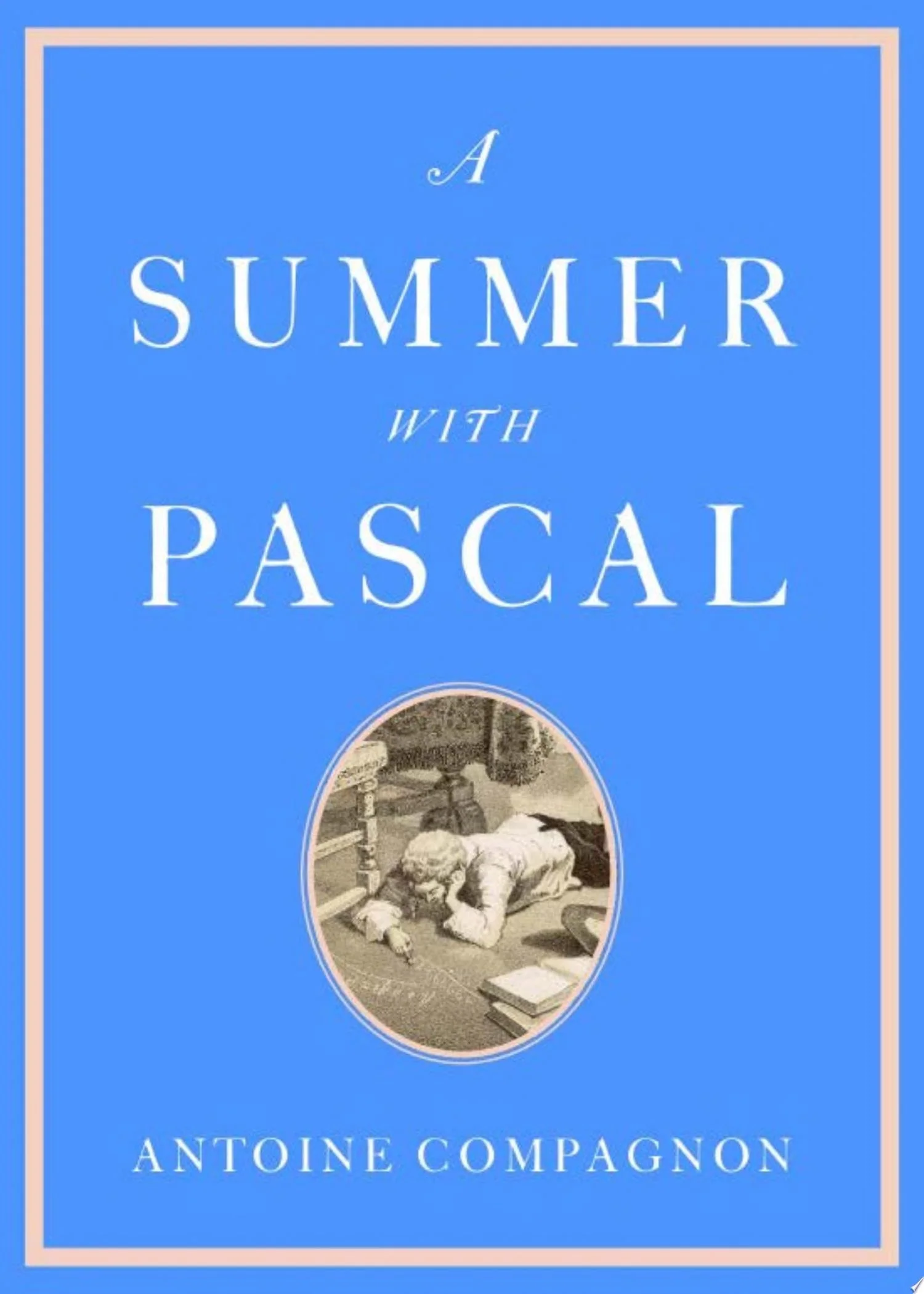
A Summer with Pascal
From an eminent scholar, a spirited introduction to one of the great polymaths in the history of Europe.
Blaise Pascal (1623–1662) is best known in the English-speaking world for his contributions to mathematics and physics, with both a triangle and a law in fluid mechanics named after him. Meanwhile, the classic film My Night at Maud’s popularized Pascal’s wager, an invitation to faith that has inspired generations of theologians. Despite the immensity of his reputation, few read him outside French schools. In A Summer with Pascal, celebrated literary critic Antoine Compagnon opens our minds to a figure somehow both towering and ignored.
Compagnon provides a bird’s-eye view of Pascal’s life and significance, making this volume an ideal introduction. Still, scholars and neophytes alike will profit greatly from his masterful readings of the Pensées—a cornerstone of Western philosophy—and the Provincial Letters, in which Pascal advanced wry theological critiques of his contemporaries. The concise, taut chapters build upon one another, easing into writings often thought to be forbidding and dour. With Compagnon as our guide, these works are not just accessible but enchanting.
A Summer with Pascal brings the early modern thinker to life in the present. In an age of profound existential doubt and assaults on truth and reason, in which religion and science are so often crudely opposed, Pascal’s sophisticated commitment to both challenges us to meet the world with true intellectual vigor.
Product Information
Product Information
Shipping & Returns
Shipping & Returns
Description
From an eminent scholar, a spirited introduction to one of the great polymaths in the history of Europe.
Blaise Pascal (1623–1662) is best known in the English-speaking world for his contributions to mathematics and physics, with both a triangle and a law in fluid mechanics named after him. Meanwhile, the classic film My Night at Maud’s popularized Pascal’s wager, an invitation to faith that has inspired generations of theologians. Despite the immensity of his reputation, few read him outside French schools. In A Summer with Pascal, celebrated literary critic Antoine Compagnon opens our minds to a figure somehow both towering and ignored.
Compagnon provides a bird’s-eye view of Pascal’s life and significance, making this volume an ideal introduction. Still, scholars and neophytes alike will profit greatly from his masterful readings of the Pensées—a cornerstone of Western philosophy—and the Provincial Letters, in which Pascal advanced wry theological critiques of his contemporaries. The concise, taut chapters build upon one another, easing into writings often thought to be forbidding and dour. With Compagnon as our guide, these works are not just accessible but enchanting.
A Summer with Pascal brings the early modern thinker to life in the present. In an age of profound existential doubt and assaults on truth and reason, in which religion and science are so often crudely opposed, Pascal’s sophisticated commitment to both challenges us to meet the world with true intellectual vigor.